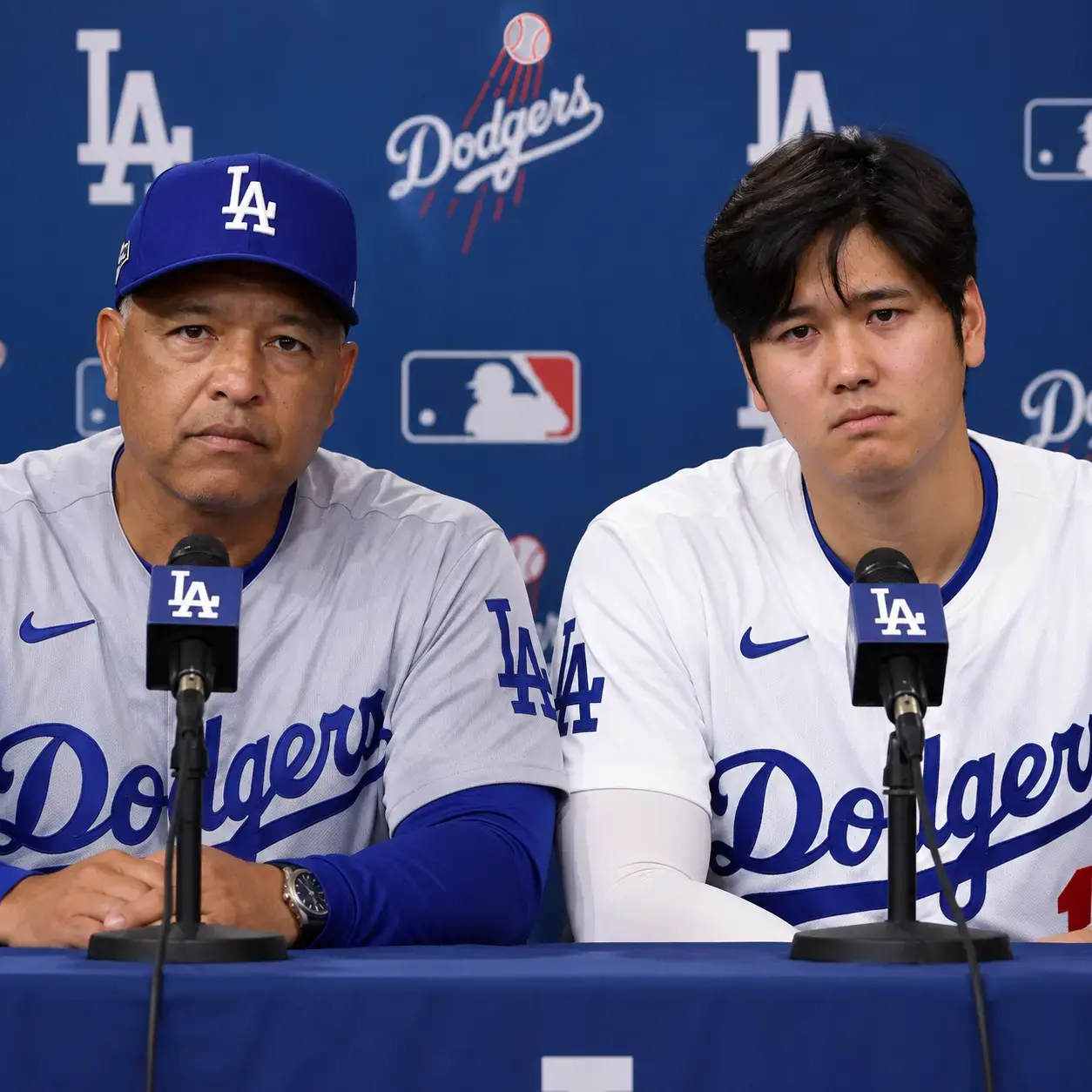
🚨🔥 SHOHEI OHTANI AT THE CENTER OF A MASSIVE ONLINE FIRESTORM — BUT THERE’S ONE HUGE PROBLEM WITH THE VIRAL CLAIM! 😳


LOS ANGELES — Shohei Ohtani, the Los Angeles Dodgers' international baseball superstar and one of the most recognizable athletes in professional sports, has found himself at the center of a heated online controversy involving an alleged statement about LGBTQ+ representation in children's cartoons.
The claim has generated intense reactions, with some social media posts suggesting that Ohtani criticized LGBTQ+ themes in animated programming intended for younger audiences. The alleged remarks have been accompanied by calls for a boycott, turning what initially appeared to be a provocative celebrity quotation into a broader debate about family entertainment, personal beliefs, and the responsibilities of public figures.
But there is one enormous problem with the controversy: There is no verified evidence presented establishing that Ohtani ever made the statement attributed to him.
That distinction is crucial.
While the alleged quotation has the potential to provoke strong feelings on both sides of a sensitive cultural debate, its authenticity remains the central unanswered question.
And until that question is resolved, treating the statement as Ohtani's genuine opinion risks transforming an unsubstantiated online allegation into a misleading story about one of baseball's biggest stars.
The Viral Quote That Sparked the Controversy
The controversy centers on a statement attributed to Ohtani claiming that LGBTQ+ themes “don't belong in children's cartoons.”
On its face, the quotation appears designed to provoke a strong emotional response.
Discussions about LGBTQ+ representation in children's entertainment have become increasingly contentious, particularly when they involve questions about age-appropriate storytelling, parental guidance, inclusion, and the role of media companies.
Attaching such a statement to an internationally celebrated athlete immediately increases its potential reach.
Ohtani is not merely a successful baseball player. He is a global sporting phenomenon whose popularity extends far beyond Major League Baseball. His accomplishments as both a pitcher and hitter have helped him build an enormous international following.
For that reason, any controversial statement attributed to him can quickly attract attention from audiences who might otherwise have little interest in baseball.
However, the existence of a widely circulated quotation does not establish its authenticity.
A screenshot, reposted caption, or unattributed social media graphic cannot substitute for a verifiable interview, recording, official statement, or credible news report.
The important question is not how many people have encountered the allegation.
It is whether Ohtani actually said the words.
What Did Shohei Ohtani Actually Say?
At the center of this story is a significant absence of verifiable evidence.
The viral allegation, as presented, does not identify a confirmed interview in which Ohtani made the statement. It does not provide an authenticated video recording, a reliable transcript, or an official communication from Ohtani or his representatives.
Without those elements, the quotation cannot responsibly be reported as a genuine statement from the Dodgers star.
That does not automatically establish who created the claim or why it began circulating. Nor does it prove that every person sharing it is deliberately attempting to mislead others.
It simply means that the allegation remains unverified.
This is especially important because Ohtani has generally maintained a carefully managed public presence, with much of his media attention focused on baseball, preparation, performance, teammates, and his professional career.
A sudden quotation involving a divisive social issue would represent a departure from the subjects most commonly associated with his public interviews.
Such a departure would make independent verification even more important, not less.
Until credible documentation emerges, readers should not assume that the alleged statement reflects Ohtani's beliefs.
Why the Boycott Claim Raises More Questions
Another striking element of the story is the suggestion that the alleged remarks have triggered calls for a boycott.
Boycott campaigns can arise for many reasons, including disagreements over corporate policies, political statements, celebrity endorsements, and cultural controversies.
However, there is a meaningful difference between isolated online comments demanding a boycott and a documented, organized campaign attracting substantial public participation.
The material accompanying this allegation does not establish the existence, scale, or leadership of a coordinated boycott against Ohtani or the Dodgers.
It also does not identify a specific organization formally announcing such a campaign.
That distinction matters because phrases such as “massive backlash” and “boycott movement” can make a handful of online reactions appear much larger than they actually are.
In the age of viral social media, dramatic language can create the impression of a widespread public revolt even when the available evidence is limited.
A legitimate assessment of the controversy would require more than screenshots or sensational captions.
It would require identifiable sources, documented statements, and evidence showing whether any boycott effort has meaningfully developed.
Without that information, the most accurate description is that an unverified quotation has been associated with boycott rhetoric online.
That is substantially different from saying Ohtani made a controversial statement and is now facing an established boycott.
A Familiar Pattern of Celebrity Misinformation
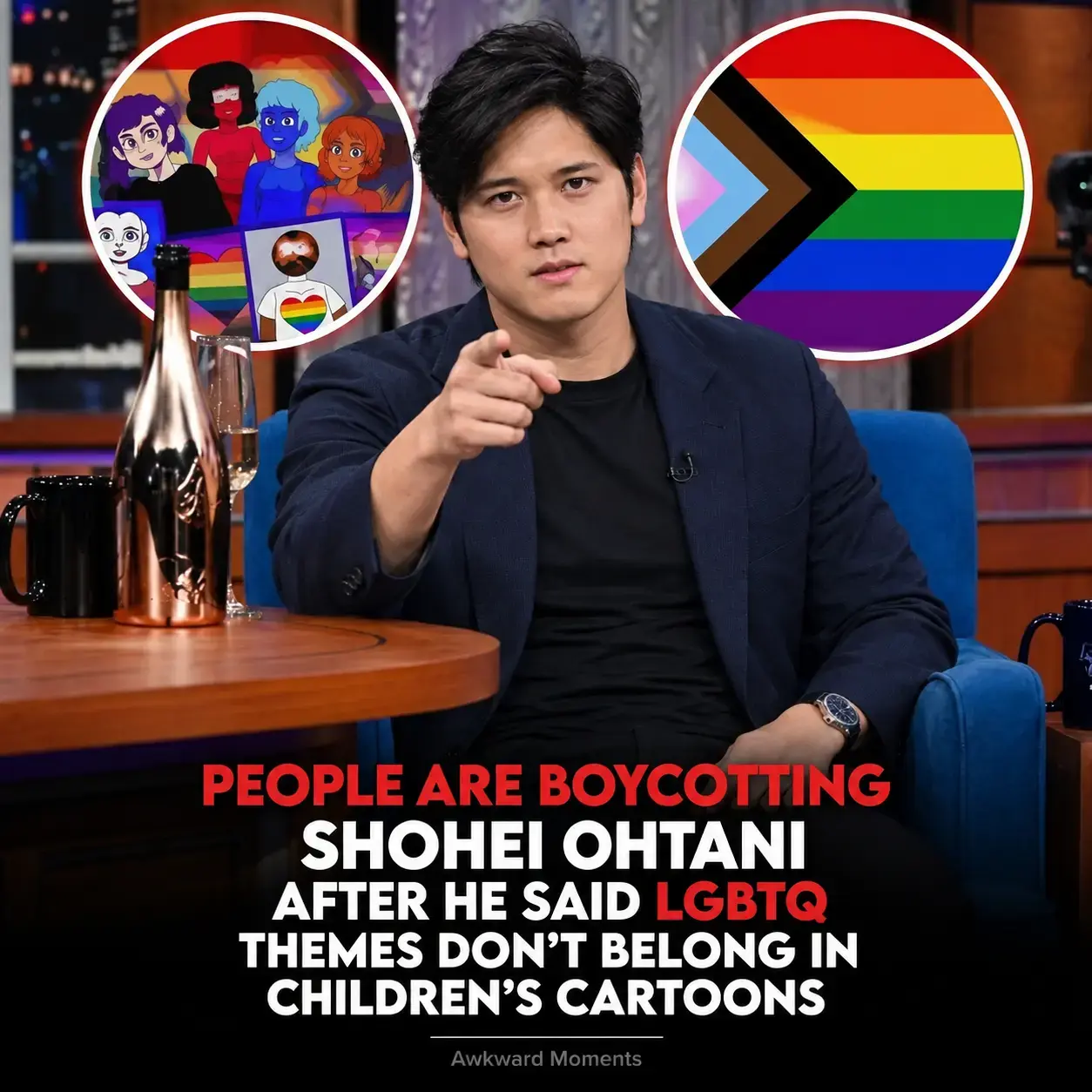
The Ohtani allegation bears a striking resemblance to a broader pattern of fabricated celebrity quotations.
In March 2026, fact-checking organization Lead Stories investigated claims that numerous celebrities had criticized LGBTQ+ themes in children's cartoons and encouraged traditional approaches to raising children.
The investigation found that nearly identical stories had been published using the names of different entertainers, athletes, and other public figures.
This finding provides important context for evaluating the claim involving Ohtani.
It does not, by itself, establish exactly where the Ohtani version originated. However, the similarity in wording and subject matter gives readers a compelling reason to question whether the statement is another variation of the previously documented misinformation campaign.
The mechanism is straightforward.
A recognizable celebrity's name is attached to an emotionally charged statement. The post presents the quotation as controversial, suggests that fans are divided, and encourages readers to click for additional details.
As the story spreads, repeated exposure can make the allegation appear increasingly credible.
Eventually, some readers may remember the alleged quotation without remembering that its authenticity was never established.
That is how an unsupported statement can become part of a celebrity's perceived public reputation.
The Real Shohei Ohtani Behind the Headlines
While the viral controversy focuses on an alleged cultural statement, Ohtani's documented public appearances offer a very different picture of the topics he has recently discussed.
In February 2026, Ohtani participated in an interview with NBC's Tom Llamas covering the Dodgers' ambitions, the possibility of winning another World Series, the team's offseason moves, and his children's book, Decoy Saves Opening Day.
During that interview, he discussed his hopes for the Dodgers' future and the inspiration behind his book, which connects his beloved dog Decoy with his experiences as a father.
Major League Baseball reported that proceeds from the book would benefit animal shelters.
These are examples of documented remarks that can be traced to identifiable reporting.
They demonstrate the difference between a statement supported by a reliable source and a quotation circulating without verifiable attribution.
Nothing in that interview establishes that Ohtani expressed the controversial views now being attributed to him.
And his participation in a project for children should not be interpreted as evidence of a position on LGBTQ+ representation.
Those are separate subjects.
Why This Matters Beyond Baseball
The larger issue extends beyond one athlete or one disputed quotation.
When fabricated statements are attributed to public figures, the consequences can reach multiple audiences.
Fans may feel disappointed or betrayed by remarks their favorite athlete never made. Critics may organize opposition based on inaccurate information. Supporters may defend a position the celebrity never publicly endorsed.
Meanwhile, the real conversation becomes buried beneath arguments about an unverified claim.
This can be particularly damaging when the subject involves communities already facing heated public debate.
Questions about representation in children's entertainment deserve discussion based on actual policies, programs, creative decisions, and accurately attributed statements.
They should not depend on invented quotations assigned to famous people.
Responsible reporting also requires distinguishing between legitimate criticism and manufactured controversy.
A celebrity who genuinely makes a controversial public statement can reasonably expect scrutiny and debate.
But an athlete should not be presented as having taken a position without sufficient evidence that the position was expressed.
The Evidence That Would Settle the Question
For the claim involving Ohtani to become credible, several basic questions would need answers.
Where and when did he supposedly make the statement? Was it delivered during an interview, press conference, podcast, or public appearance? Is there a complete recording or transcript? Was the quotation translated from Japanese, and if so, can the original wording be independently verified?
These questions are particularly important for an international athlete whose public comments are frequently delivered through interpreters.
Translation can introduce differences in phrasing, but translation concerns cannot explain the complete absence of an identifiable original source.
Without such documentation, there is no reliable basis for presenting the quotation as authentic.
Likewise, any claimed boycott should be assessed through identifiable participants, public statements, and documented activity rather than sensational social media captions.
The Bottom Line: Did Ohtani Really Say It?
For now, the most significant revelation is not an explosive statement from Shohei Ohtani.
It is the lack of credible evidence that he made the statement at all.
A search for corroboration did not identify a reliable original interview, official statement, or authenticated recording supporting the alleged quotation about LGBTQ+ themes in children's cartoons.
Furthermore, independent fact-checking has already exposed remarkably similar stories involving other celebrities as fabricated online clickbait.
That does not establish Ohtani's personal opinions on the subject, nor does it prove the exact origin of every post using his name.
It does establish why caution is necessary.
Ohtani remains one of baseball's most prominent international stars, and his words carry enormous public influence. Precisely because of that influence, statements attributed to him deserve careful verification.
The central conclusion is clear: The alleged quotation is unverified, and there is no demonstrated basis for treating it as Shohei Ohtani's genuine statement.
The viral controversy may have a dramatic headline, but the evidence tells a far more important story about how easily a celebrity's name can be used to give an unsupported claim the appearance of authority.
Until authentic documentation emerges, the responsible response is not to condemn or celebrate Ohtani for the alleged remark.
It is to ask for proof.
And in this case, that missing proof is the biggest story of all.