🙏💔 Pope Leo XIV’s Emotional Return to the Vatican: An Imagined Moment of Tears, Faith, and Fierce Debate
The car slows as it approaches the Vatican, and the waiting crowd begins to stir. Beyond the windows, familiar stone walls emerge in the afternoon light, marking the end of a journey that has left its mark on the man returning home. In this imagined account, Pope Leo XIV looks toward the entrance, then lowers his eyes as though gathering the strength to step outside.
The journey has brought him into rooms where suffering cannot be reduced to a speech. He has listened to families describe separation, watched volunteers stretch limited supplies, and met people whose prayers contain questions nobody can easily answer. Now, surrounded by familiar surroundings, he finds that the memories have followed him back.
An aide quietly tells him that people are waiting. The Pope nods, straightens his sleeves, and places a hand against the door before it opens. For a brief second, the responsibilities of the next appearance seem to compete with everything he has carried from the road.
Outside, applause rises from the small gathering. Some people hold rosaries, while others lift handwritten messages above their heads. A child near the front waves with both hands, and the Pope’s expression softens as he notices her.

He raises his hand in greeting, but the gesture pauses midway. His eyes remain fixed on the child, whose excitement recalls another young face from his journey. The crowd cannot know what he is remembering, yet something in his stillness causes the applause to fade.
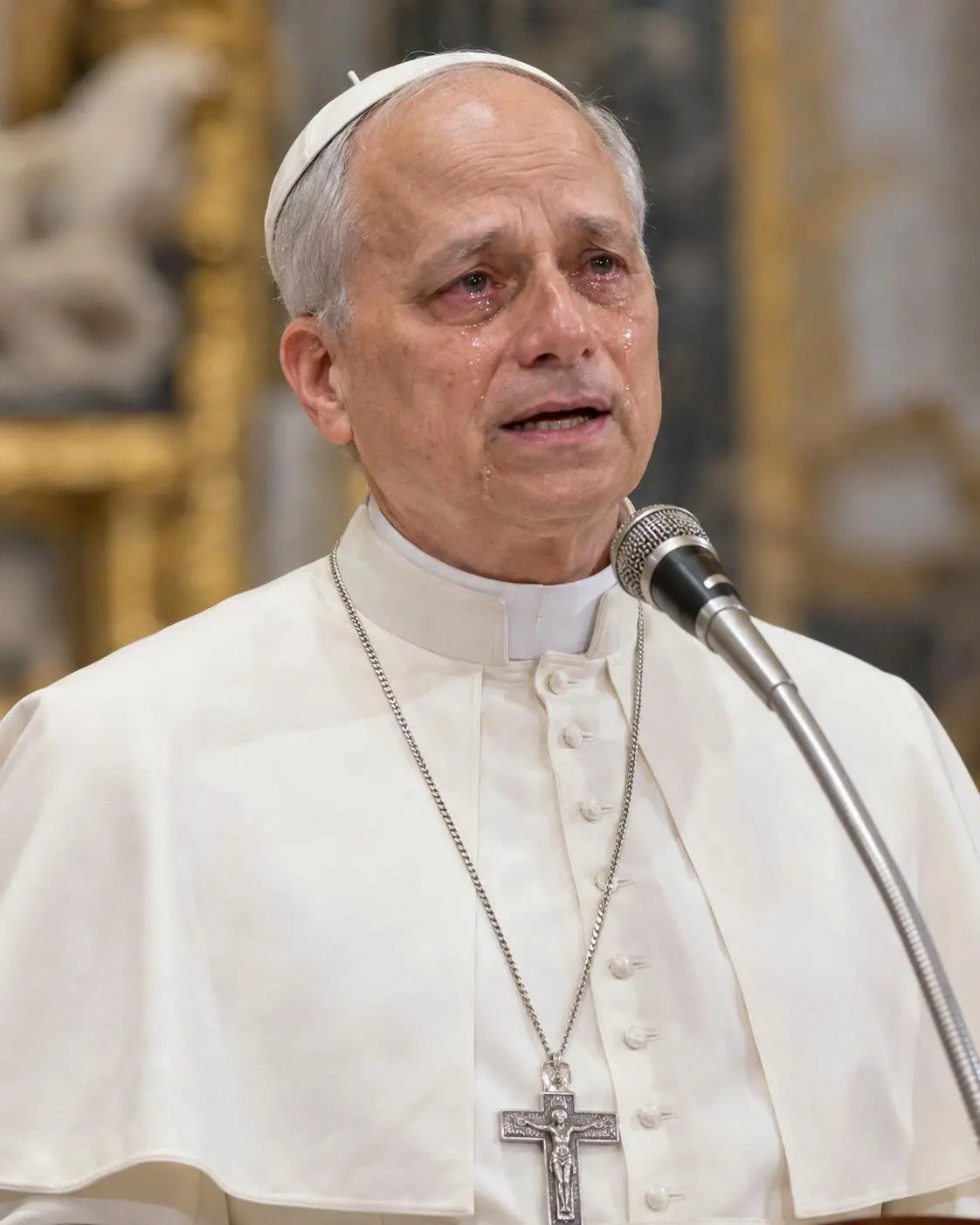
In the story, a camera captures him blinking back tears. He presses his lips together, breathes slowly, and turns briefly toward an aide. Nothing dramatic happens, but the interruption breaks the rhythm of an appearance everyone expected to unfold smoothly.
The aide asks whether he would prefer to continue inside. Pope Leo shakes his head and walks toward the people waiting behind the barrier. He seems determined to acknowledge their welcome, even as his composure remains fragile.
An elderly woman reaches forward with a small photograph. She explains that it shows her family, including someone who has been away from home for many years. The Pope listens without interrupting, studying the photograph before returning it carefully to her hands.
“Please remember him,” she asks in invented dialogue. The Pope answers that he will, then remains beside her for another moment. Her request is simple, but it brings the distant encounters of his journey into the place where he has returned.
When he finally speaks to the gathering, his opening words are quiet. “I have come home,” he says in this imagined scene, “but there are people I cannot leave behind.” Several listeners bow their heads, and an aide steps back to give him space.
He describes no spectacular revelation. Instead, he recalls a parent asking for safety, a volunteer working through exhaustion, and a child who wanted someone to listen. His voice catches when he explains how easily such encounters can become memories while the people themselves continue facing the same difficulties.
That sentence becomes the center of the imagined public response. Supporters hear a moving acknowledgment that a meaningful journey should change what happens afterward. Others question whether another emotional appearance will produce anything beyond a widely shared clip.
The disagreement intensifies as short excerpts circulate within the narrative. One version ends with the Pope’s tears, while another includes his appeal to remember the people he met. Viewers watching different edits begin arguing about an event they have experienced in noticeably different ways.
Some welcome the visible emotion because it makes leadership feel approachable. They believe a person entrusted with spiritual responsibility should remain capable of being affected by suffering. For them, the pause outside the Vatican suggests that listening has had a personal cost.
Other voices are more demanding. They ask what resources will follow, which requests will receive attention, and how the encounters will influence future decisions. Their concern is that admiration for the Pope’s reaction could draw attention away from the needs that prompted it.
Inside the Vatican, the Pope eventually sits with the people who accompanied him. An aide mentions that the emotional moment is attracting interest, expecting him to ask about the response. Instead, he asks whether anyone has followed up with a community they visited near the end of the journey.
The question redirects the conversation. Notes are opened, names checked, and unfinished requests brought back into view. In this imagined account, the practical work begins with details that would never fit into a dramatic headline.

One request concerns support for a small local project. Another requires contact with someone who may be able to help a separated family. The Pope listens as his aides explain what they know, asking them to distinguish achievable next steps from promises they cannot responsibly make.
Later, when the room empties, the exhaustion becomes more apparent. He removes his glasses and looks again at a page of handwritten notes from the journey. Beside one name, he has recorded a few words spoken during a conversation that still troubles him.
An aide returns with water and asks whether the afternoon was too difficult. The Pope takes a moment before answering. “It would worry me more if it had become easy,” he says in dialogue created for this story.
That answer does not resolve the debate outside. People can reasonably differ about the meaning of public emotion, especially when suffering remains unchanged after an important visitor leaves. The tension gives the scene its weight: compassion is visible in an instant, while responsibility must be demonstrated over time.
As evening settles, the courtyard grows quiet. The barriers remain, but the crowd has gone, leaving the entrance looking ordinary again. Somewhere beyond the Vatican, the people remembered that afternoon are continuing their lives without knowing which decisions might follow.
The final scene offers no sweeping announcement. Pope Leo returns to his notes and marks the matters that need attention the following morning. The image that attracted interest was a tearful pause, but the story leaves its most important question on the desk before him: what will he do with what he has heard?
Three illustrative images of Pope Leo XIV and the Vatican; they do not document the imagined emotional return.